GAMES EXPLAINED · 3 MIN READ
How Does the African Global Fashion Games Work?
Countries competing for medals, with fashion in place of athletics: a guide to the disciplines, judging and participation at AGFG.
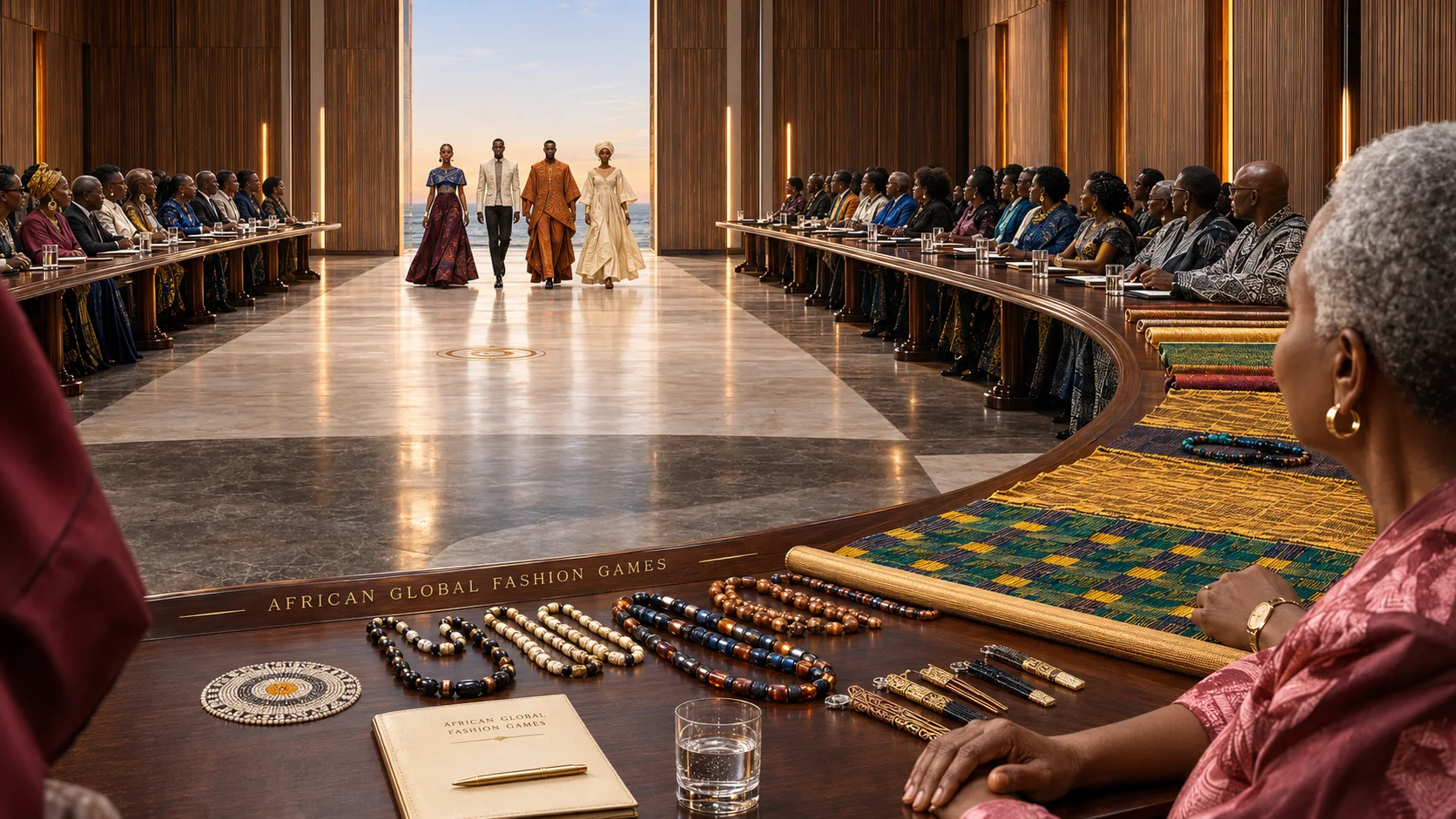
Imagine a fashion competition where countries compete for medals, just as they do in international sporting events, but instead of athletics, the challenges involve designing, making and testing garments.
That is the idea behind the African Global Fashion Games (AGFG), an international fashion championship where designers and fashion professionals represent their nations and compete against the world’s best.
The inaugural Games will take place in 2028, bringing countries from across the world together for 12 days of competition across seven disciplines and 27 medal events.
But how exactly will it work?
One Championship for the World
Unlike traditional fashion events that primarily recognise individual designers and brands, AGFG introduces national representation into fashion competition.
Designers compete on behalf of their countries, with participating nations working towards Gold, Silver and Bronze medals.
Every country competes within the same global championship. This means a designer representing Nigeria could compete directly against participants from France, Japan or Brazil in the same event, with everyone assessed using the same rules and judging criteria.
For African designers, this creates an opportunity to compete alongside some of the world’s leading fashion talent and demonstrate their skills against the same international standards.
Seven Disciplines, 27 Medal Events
The Games will test fashion in ways that go beyond the appearance of a finished garment.
Each of the seven disciplines focuses on a different aspect of fashion.
Trial tests how fabrics respond to strength, water, wind and heat, while Motion examines garment performance during physical activities such as sprints, relays, dives and marathons.
Craft puts technical skills to the test through timed challenges in weaving, tailoring, embroidery and draping. It also includes Instant Craft, where competitors receive identical materials and must create a garment within a fixed time.
In Design, entries are judged without revealing the countries they represent, allowing judges to focus on the quality and originality of the work.
Spectacle explores fashion in unusual settings, including underwater and aerial presentations, while Future invites universities and startups to develop innovations such as smart garments, grown materials and climate-ready clothing.
The final discipline, Unity, pairs participating nations to create garments together through fashion diplomacy. Both countries work towards a shared result and share any medals awarded for their collaboration.
Together, these disciplines make up 27 medal events held over the 12-day championship.
How Are Winners Decided?
Each medal event will have its own competition rules and assessment criteria based on what participants are required to demonstrate.
For example, Trial will assess fabric performance under specified conditions, while Craft will evaluate technical skills and execution within a set time. Design will use blind judging to assess entries without disclosing the countries behind them.
All participants competing in the same event will be assessed under the same standards, regardless of nationality.
Gold, Silver and Bronze medals will be awarded according to the results of each event, with the final judging and medal regulations published ahead of the Games.
How Can Countries Participate?
The Games are open to interested countries from Africa and around the world.
To begin the participation process, countries express their interest and sign the AGFG Charter, which establishes the framework for national participation.
Countries then coordinate their delegations and prepare eligible designers and fashion professionals to represent them in the competition.
Official qualification requirements, registration procedures and deadlines will be announced before applications open.
What Happens After the Competition?
The Games will conclude with a global fashion festival featuring exhibitions and sales from participating nations.
Throughout the programme, designers, manufacturers, buyers, investors and policymakers will also have opportunities to meet, explore commercial partnerships and discuss the development of the fashion industry.
On the final day, participating nations will have the opportunity to sign a shared declaration supporting international cooperation in fashion.
This is an important part of what AGFG hopes to achieve. Alongside recognising the world’s best fashion talent, the Games are designed to create relationships that can support manufacturing, trade, investment and access to new markets.
Back to all stories